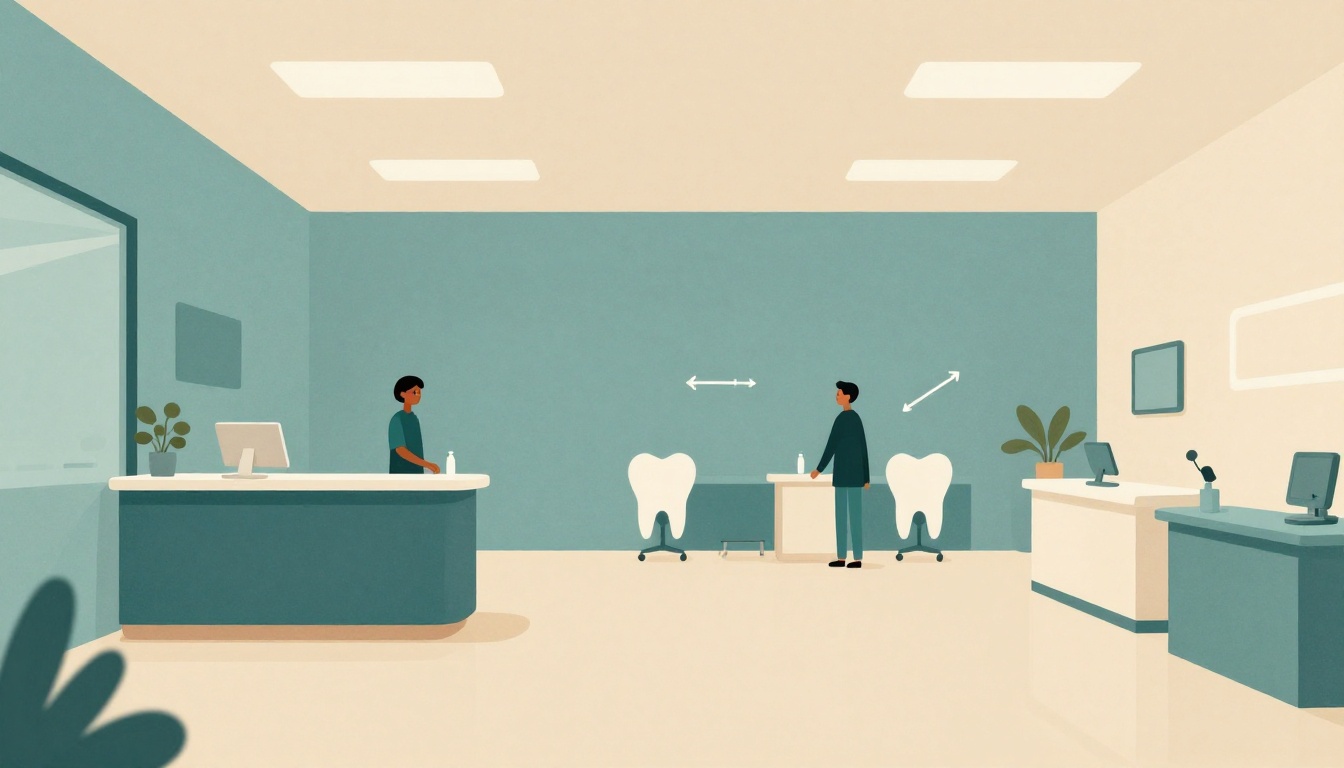
If your patients are waiting more than 10 minutes in the reception area, your practice is already losing trust and revenue. Long wait times are among the top three reasons patients leave a practice, according to ADA data cited by DOCS Education. The fix isn't working faster—it's working smarter with a visual patient flow map.
A patient flow map is a diagram that tracks every step a patient takes from first contact to checkout. It reveals where delays happen, who is responsible for each handoff, and where you can eliminate waste. Practices that implement workflow optimization strategies have cut patient delays by up to 30% while improving satisfaction and profitability.
According to ADA data cited in the article, what is the recommended maximum wait time for patients in the reception area?
Select one answer.
Why your practice needs a patient flow map
Without a map, your team operates on assumptions. The front desk thinks the clinical team is ready; the clinical team thinks the front desk is still checking in the patient. These miscommunications create bottlenecks in reception areas, operatories, and sterilization rooms.
A well-designed flow chart turns your daily operations into a repeatable system. It helps you:
- Identify where patients wait longest
- Clarify staff roles at each stage
- Reduce redundant data entry
- Standardize handoffs between front office and clinical teams
Step 1: Map your current patient journey
Start by documenting your existing workflow from the patient's perspective. Include every touchpoint:
- Initial contact – phone call, website inquiry, or walk-in
- Scheduling – how appointments are booked and confirmed
- Pre-appointment – insurance verification, digital intake forms, reminders
- Check-in – arrival, paperwork, payment collection
- Clinical flow – escort to operatory, exam, treatment, handoffs
- Checkout – scheduling follow-up, billing, referrals
Use a whiteboard or simple flowchart tool. Involve your front desk, hygienists, assistants, and dentist in the mapping session. Each role sees different friction points.
Step 2: Identify bottlenecks and waste
Once your current map is visible, look for common problem areas:
- Paperwork pileups – patients filling out forms in the waiting room instead of before arrival
- Double data entry – the same information entered by front desk and again by clinical staff
- Unclear handoffs – no signal when the operatory is ready for the next patient
- Overlapping tasks – front desk handling phones while checking in a patient
Research from ProspHire notes that the three areas that often experience slowdowns are reception areas, sterilization rooms, and operatories. Paperwork and inaccessible online information are primary culprits.
Step 3: Design your ideal future-state map
Create a new map that eliminates the bottlenecks you identified. Key improvements to include:
- Digital patient intake – send forms via email or text before the appointment so patients complete them at home. This alone can reduce check-in time significantly.
- Buffer time between appointments – strategically place short blocks of unscheduled time after longer procedures to absorb delays.
- Automated reminders – layered email, SMS, and phone reminders can cut no-shows by up to 90%, keeping your schedule on track.
- Virtual check-in – allow patients to check in from their phone when they arrive, notifying the team without crowding the front desk.
Step 4: Implement and measure
Roll out your new flow map one change at a time. Track these metrics before and after:
- Average wait time in reception (target: under 10 minutes)
- Time from check-in to operatory
- Patient satisfaction scores
- No-show and cancellation rates
Review the map quarterly with your team. Patient flow is not a one-time project—it's a living system that evolves with your practice.
How the Featured Expert Can Help
Tonya Brock, a fractional dental operations partner at tbrockdentalops.com, specializes in helping practice owners streamline daily operations and tackle unscheduled treatment. She offers executive-level operational support without the overhead of a full-time hire, focusing on systems that improve efficiency and reclaim your time.